Wooden Spatula Guide: Which Shape for Which Job
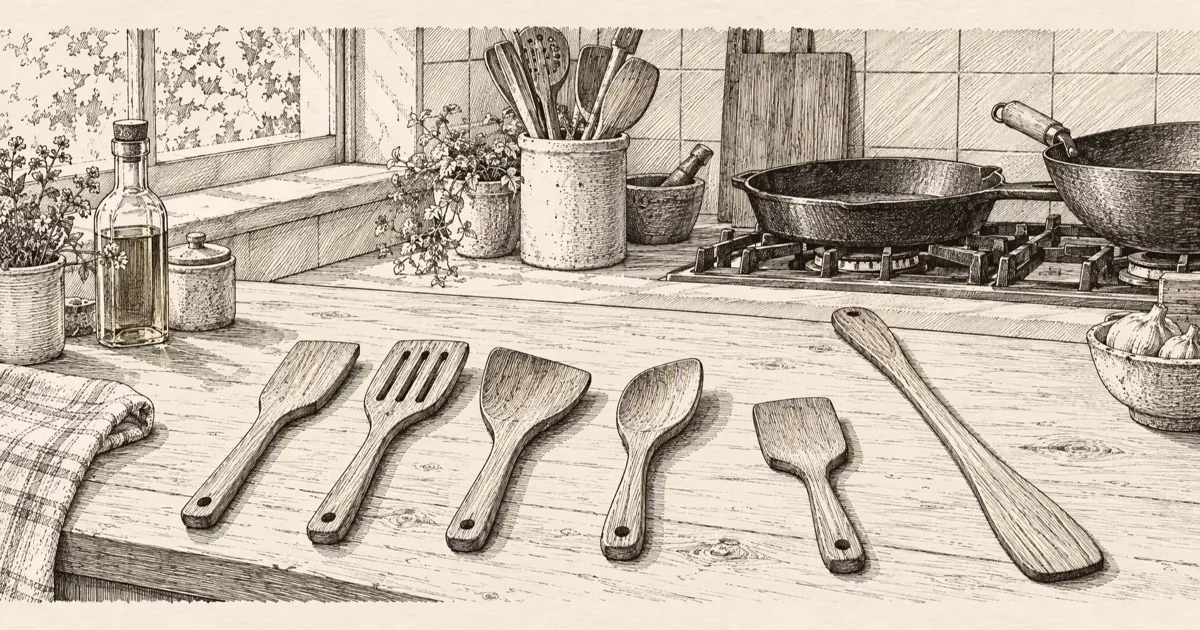
Most kitchens have one wooden spatula doing every job: scraping fond, flipping eggs, stirring a pot of chili. It copes, but not well. The shape of the blade decides what a spatula is good at, and once you know which shape does what, you stop fighting the tool.
This guide covers the shapes worth owning, what each one is actually for, and why the wood matters as much as the shape.
Why wood, and why teak
A wooden spatula will not scratch nonstick coatings or enameled cast iron, does not conduct heat up the handle, and will not melt if you rest it on the edge of a hot pan. Those are the reasons people buy wood in the first place.
The wood itself decides how long that lasts. Softer, thirstier woods soak up water, swell, and crack along the grain within a year or two. Teak is dense and naturally oily, so it takes on far less water, resists warping, and does not hold food smells the way lighter woods can. Carved from a single piece, with no glued joins, it has nothing to split apart.
Flat-edge spatulas: for cast iron and scraping
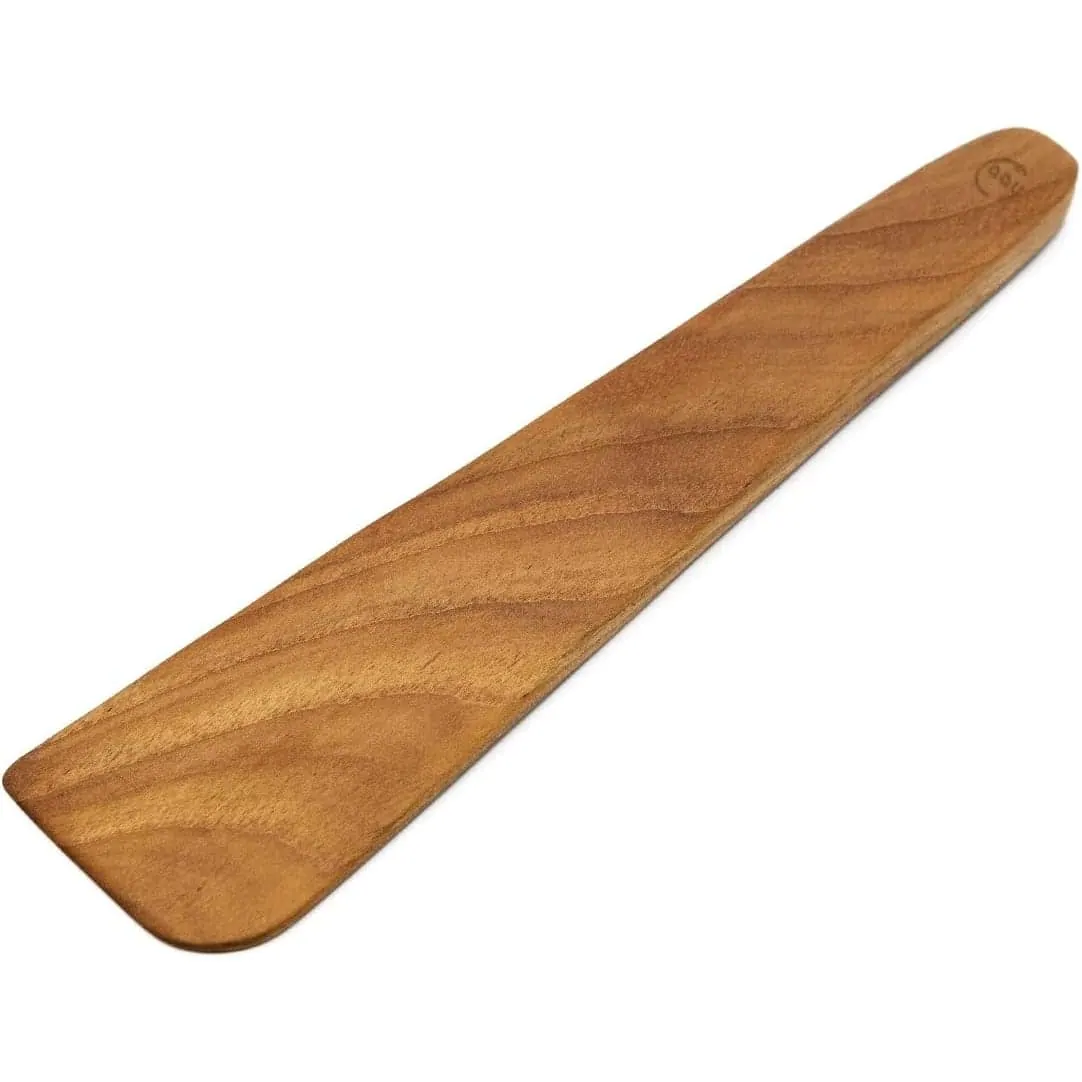
A flat, straight-edged blade sits flush against the bottom of a pan. That makes it the right tool for scraping up browned bits when you deglaze, lifting a crust off a cast-iron skillet, and working right into the corner where the wall meets the base.
Look for a thin, firm edge. Too thick and it skates over food instead of getting underneath it.
- 10″ Flat Wooden Spatula for Cast Iron — the everyday size for a 10–12″ skillet.
- 13″ Flat Wooden Spatula for Cast Iron — extra reach for deep pans and Dutch ovens, keeping your knuckles away from the heat.
- Teak Wooden Turner, 12″ Flat Edge — a wider, longer blade for turning larger pieces.
Slotted spatulas: for turning and draining
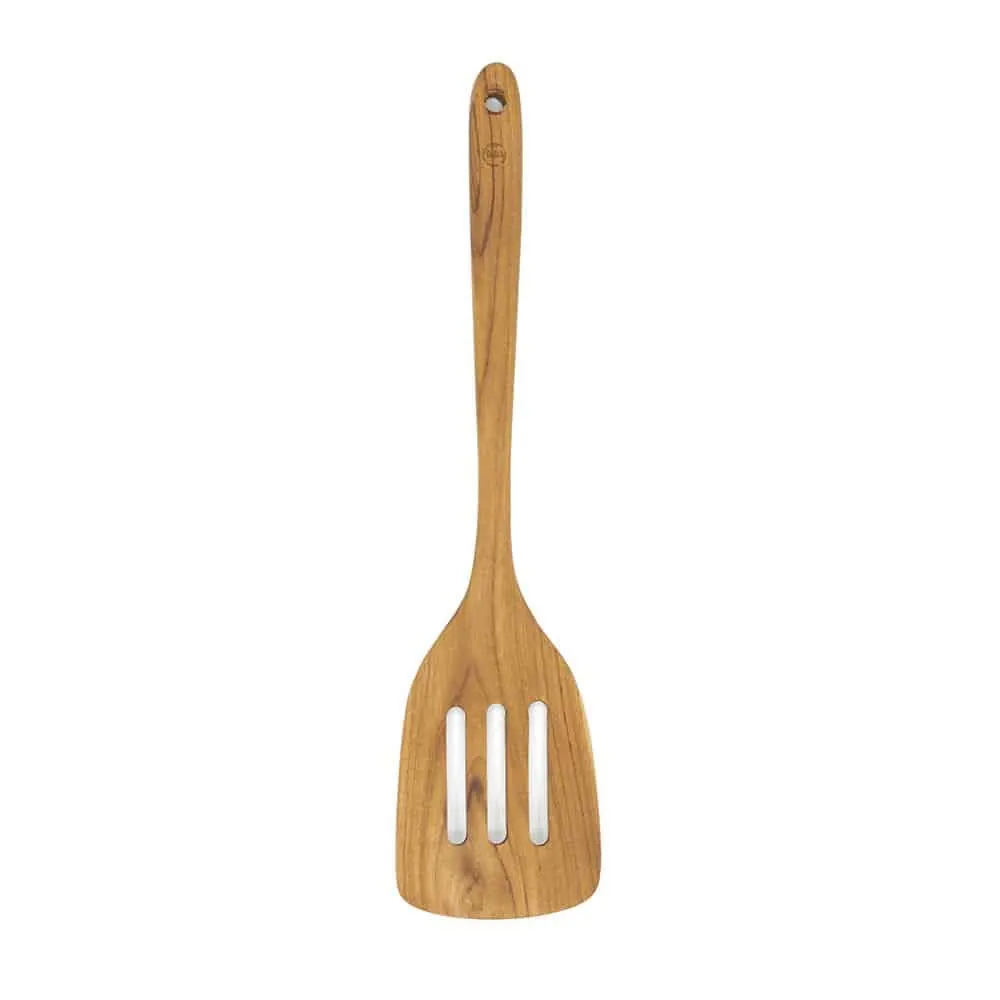
Slots let oil and liquid drain away as you lift, so fried eggs, fish fillets and pan-fried potatoes come out of the pan without a pool of fat on top. A slotted turner is also lighter in the hand, which matters when you are flipping a whole pan of something one piece at a time.
- Teak Wood Slotted Spatula — wide blade and long handle, built for nonstick pans.
Stir-fry spatulas: for the wok
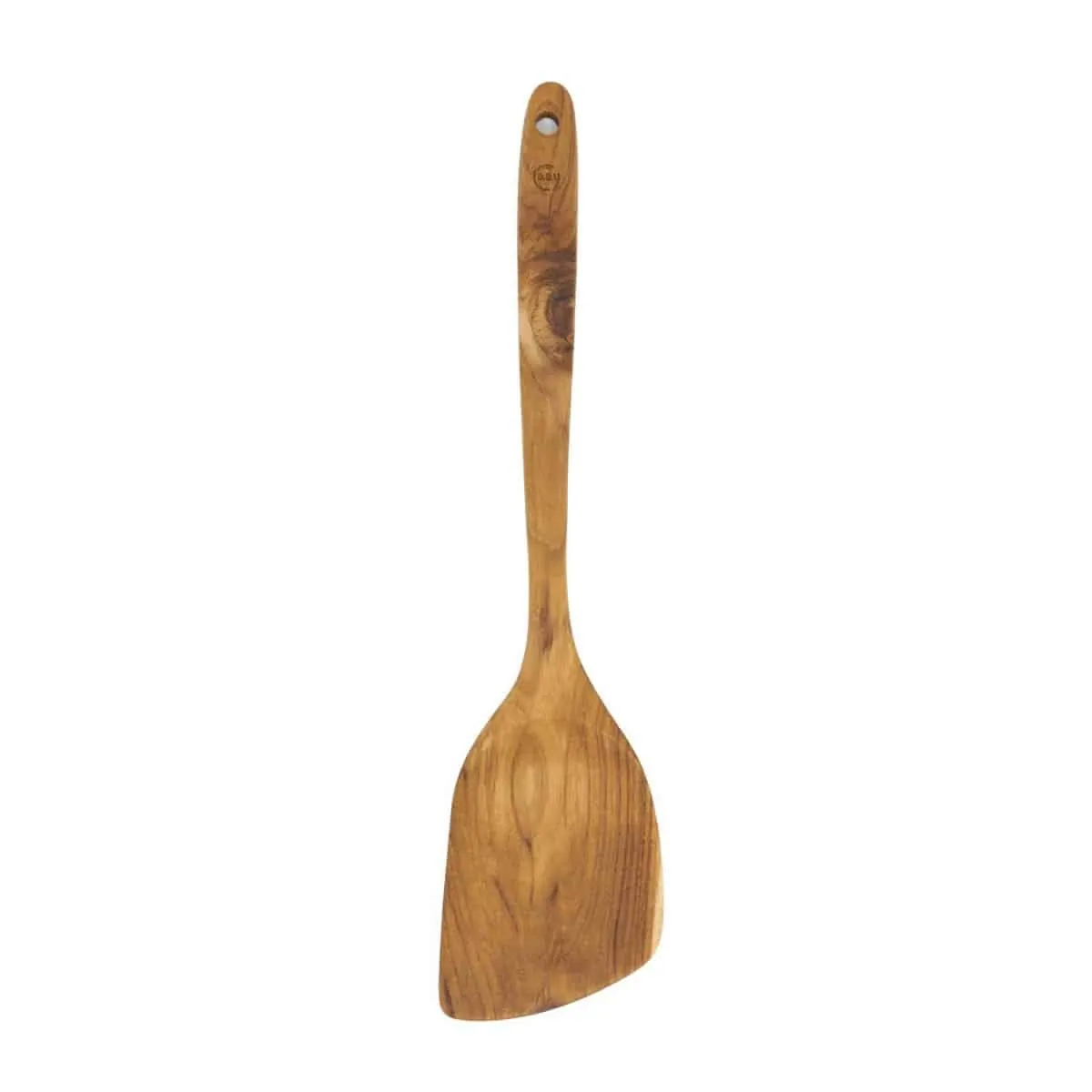
A wok spatula has a curved, angled head that follows the round wall of the pan, so you can toss and turn rice or noodles in one sweeping motion instead of chasing them around. Because the angle is set for one hand, the head is cut either left- or right-handed. Using a right-handed spatula in your left hand works against you.
- 13.5″ Stir Fry Wooden Spatula, Right Hand — Thai wok style, long handle to keep your hand off the heat.
- Right Hand Chopper Spoon–Spatula — an angled edge for breaking up ground meat as it browns, with a shallow bowl for stirring.
All-purpose spatulas: the everyday one
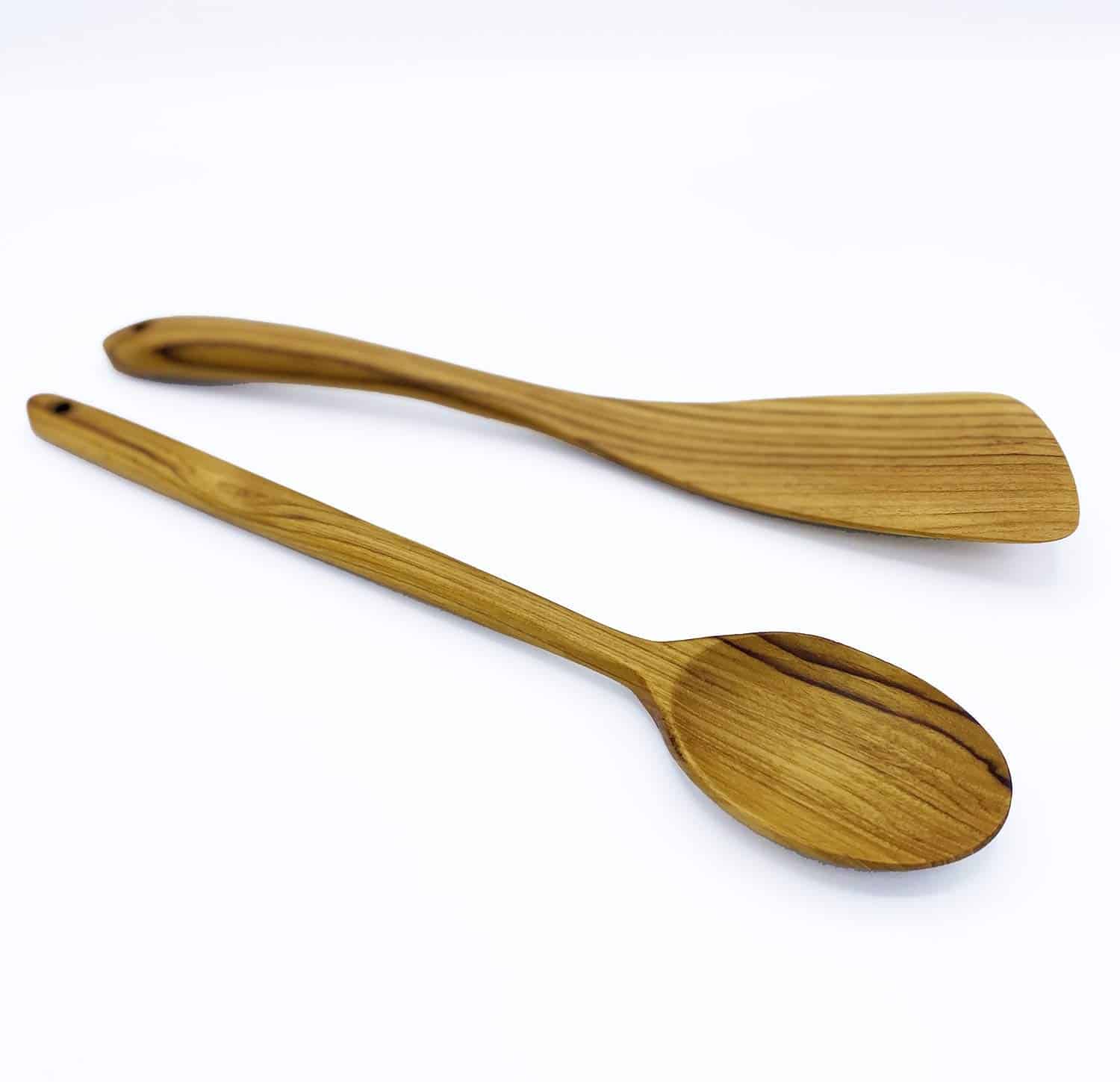
If you only have room for one, choose a medium blade with a slightly rounded tip. It stirs sauces, folds eggs, and scrapes a saucepan well enough without being specialized for any of them.
- 12.5″ Teak Wooden Spatula — the all-rounder, safe on nonstick.
- Teak Compact Spatula — a shorter version for small pans, sauce pots and tight drawers.
Big-pot paddles: for stockpots and boils
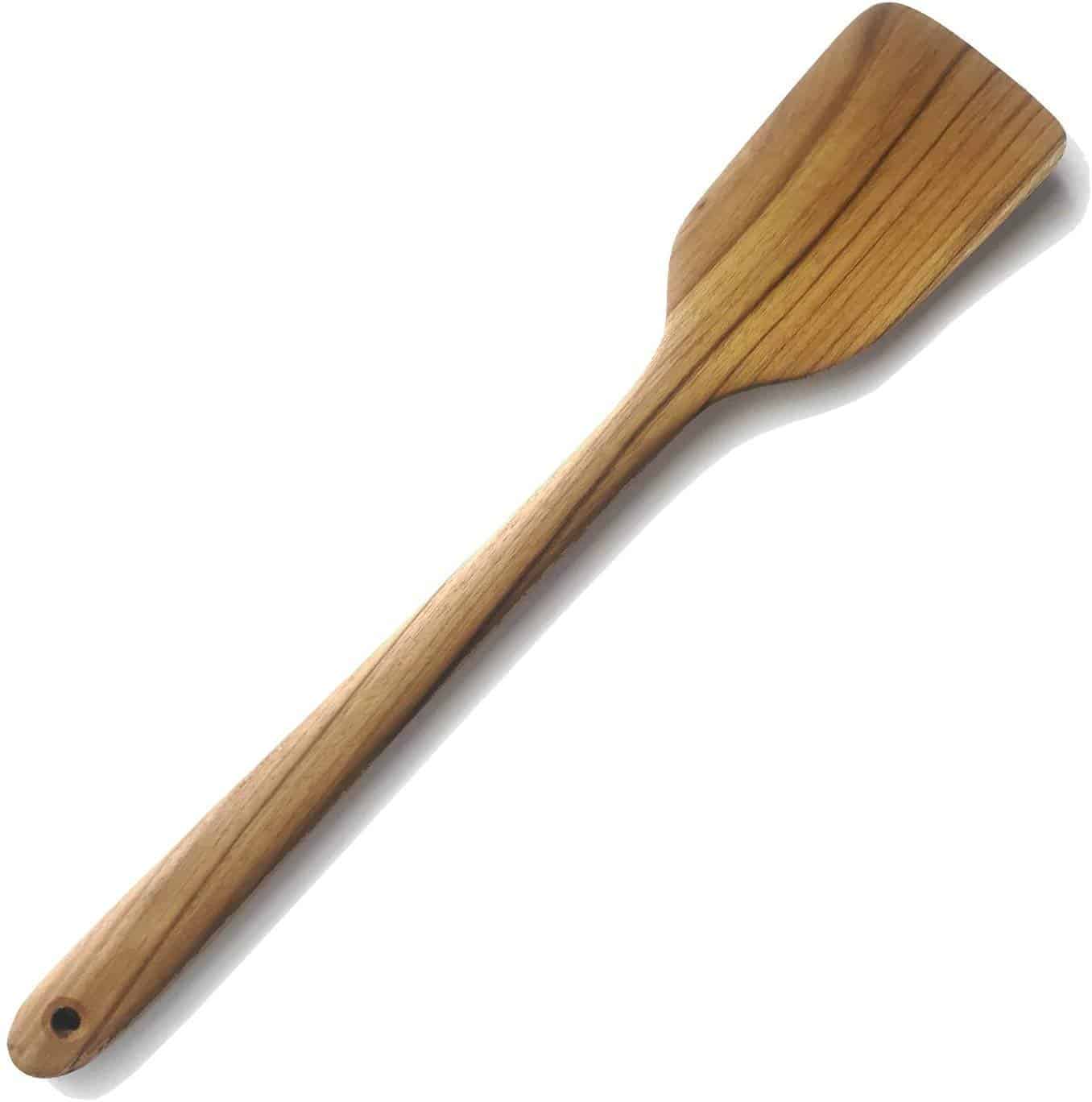
Stirring a 20-quart gumbo or a crawfish boil with a 12″ spatula puts your hand in the steam. A long paddle reaches the bottom of a deep pot to keep things from catching, and has the stiffness to move a heavy load.
- 18″ Teak Large Wooden Spoon Spatula — a heavy-duty stir paddle for big pots, seafood boils and gumbo.
How to choose: a quick match-up
| You mostly cook… | Reach for |
|---|---|
| In cast iron or stainless, and deglaze often | Flat edge, 10″ or 13″ |
| Fried eggs, fish, anything you flip | Slotted turner |
| Stir-fries in a wok | Stir-fry spatula, matched to your hand |
| Ground meat, chili, taco filling | Chopper spoon–spatula |
| A bit of everything on nonstick | 12.5″ all-purpose |
| Big batches in a stockpot | 18″ paddle |
Most cooks end up with two: one flat edge for scraping and one shape for the cooking they do most.
Caring for a wooden spatula
A teak spatula should last for years if you avoid the three things that ruin wood: soaking, dishwashers, and putting it away wet.
- Wash by hand in warm, soapy water straight after use.
- Dry it immediately with a towel, then let it air-dry standing up.
- Oil it with food-grade mineral or coconut oil when the wood looks pale or feels rough, usually once a month.
- Never leave it in the sink. Standing water is what makes wood swell and crack.
The full routine is in our guide to caring for teak utensils, and if you are still deciding on a material, see teak vs bamboo cooking utensils.
FAQ
Are wooden spatulas safe for nonstick pans?
Yes. Wood is softer than nonstick coatings, so it will not scratch them, which is one of the main reasons to choose wood over metal. See can you use wooden utensils on nonstick pans.
Can a wooden spatula go in the dishwasher?
No. The heat and long soak dry the wood out and crack it. Hand-wash it and dry it straight away.
What is the best wood for a spatula?
A dense, tight-grained hardwood. Teak is a strong choice because its natural oils resist water and odors. Maple, olive and cherry also work well. Softwoods and cheap, thirsty woods crack sooner.
When should I replace a wooden spatula?
When it has deep cracks, a split along the grain, or a smell that will not wash out. Surface scratches and darkening are normal and can be sanded and re-oiled.